
Foundation Drainage and Water Management in New Braunfels, TX
New Braunfels Superior Foundation Repair offers professional foundation drainage and water management in New Braunfels, TX with 23 years of fixing the water problems that move foundations. We install French drains, underground downspout lines, surface drains and catch basins, regrade soil away from the slab and set up foundation watering systems. French drains run $32 to $55 a linear foot.
On expansive clay, water does more damage than weight. Too much on one side swells the soil, too little shrinks it, and the slab rides the difference. We build drainage so the ground falls at least 6 inches in the first 10 feet, carry downspouts at least 5 feet out, and back the work with a 5-year workmanship warranty.
Get a FREE Estimate
Or call (830) 221-9409
Foundation Drainage Solutions
French Drains
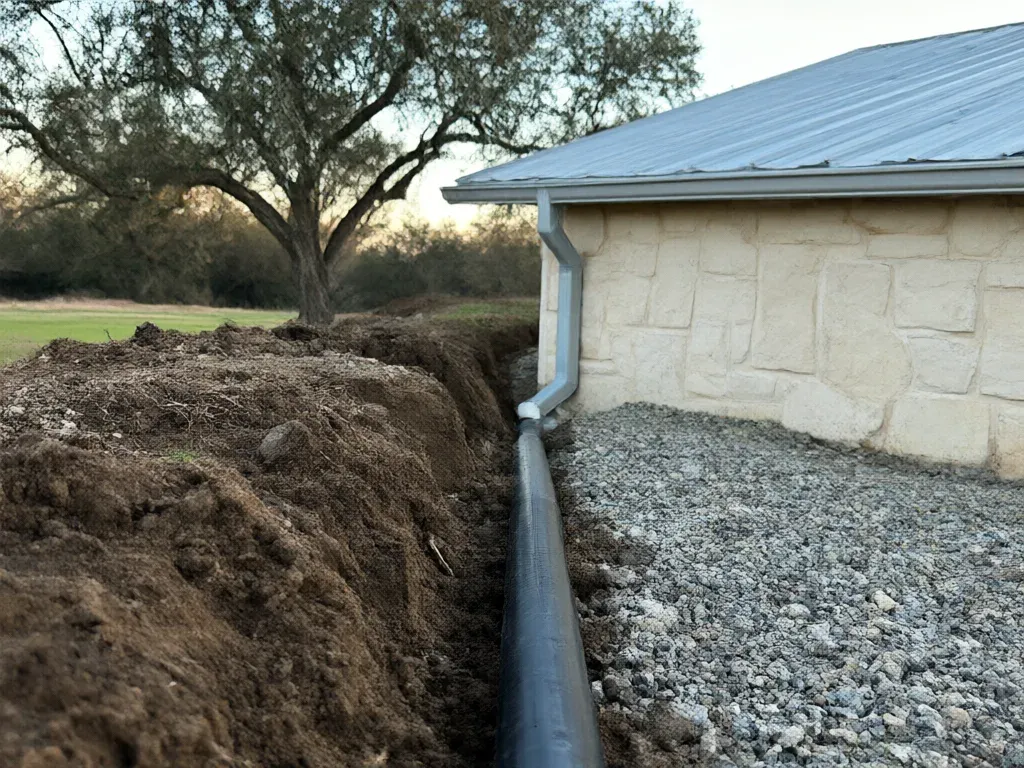
A French drain catches water moving through the soil and carries it away from the house. We trench 12 to 18 inches deep, lay 4-inch perforated pipe in washed gravel wrapped in filter fabric, and hold at least 1/8 inch of fall per foot to a daylight outlet or a pop-up emitter.
Underground Downspout Lines
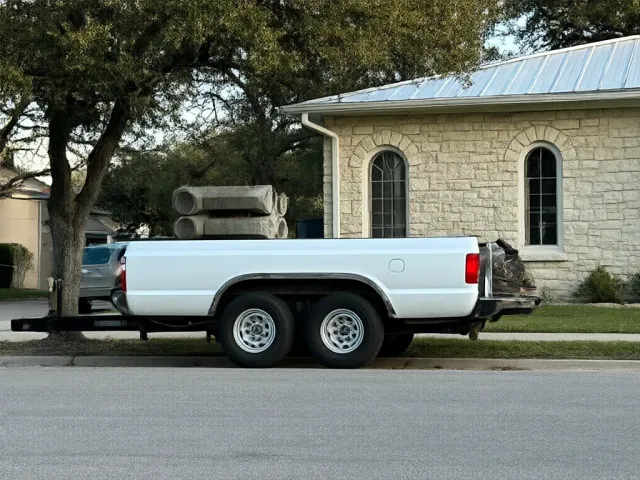
A downspout that dumps at the corner of the house puts hundreds of gallons against one spot of the slab in a big storm. We tie downspouts into 4-inch solid pipe and run it out to a pop-up emitter in the yard, at $18 to $30 a linear foot.
Surface Drains and Catch Basins
Low spots in the yard, patios that pitch toward the house and driveways that funnel water at the garage all need somewhere for the water to go. Catch basins pick it up at the surface and pipe it away in solid line, priced by the foot like a downspout run.
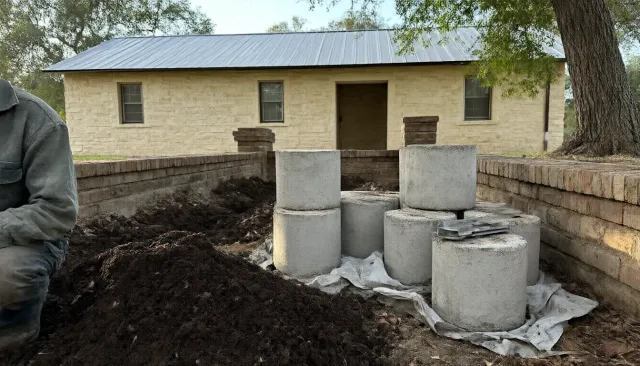
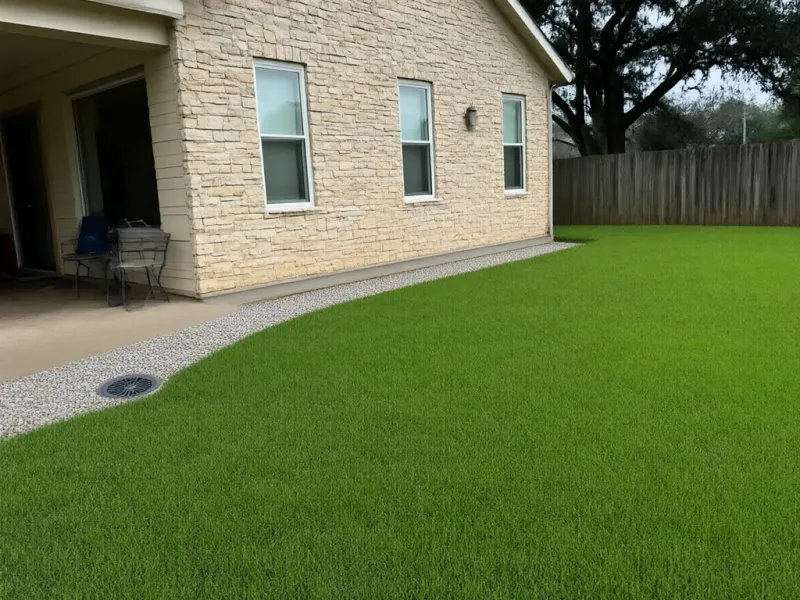
Yard Regrading Around the Foundation
The ground should fall away from the house, at least 6 inches in the first 10 feet. Flower beds built up over the years, settled backfill and new sod often reverse that. Regrading runs $1,200 to $3,800, depending on how much soil has to move.
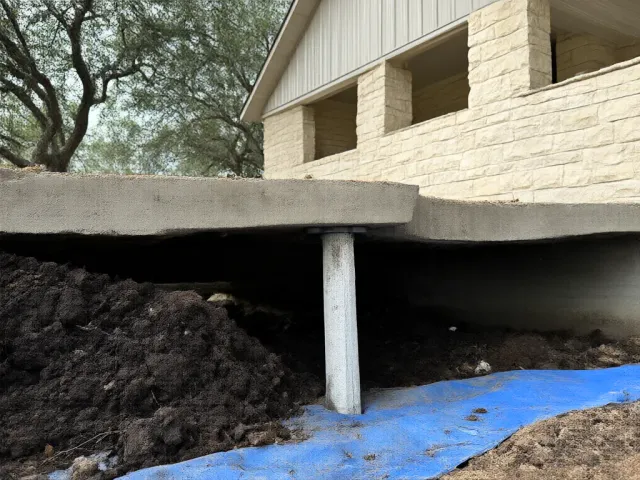
Foundation Watering Systems
Drainage keeps water off the foundation in a storm. Watering keeps the clay from drying out in a drought. A drip or soaker line 12 to 18 inches out from the slab, on a timer, runs $650 to $1,400 installed.
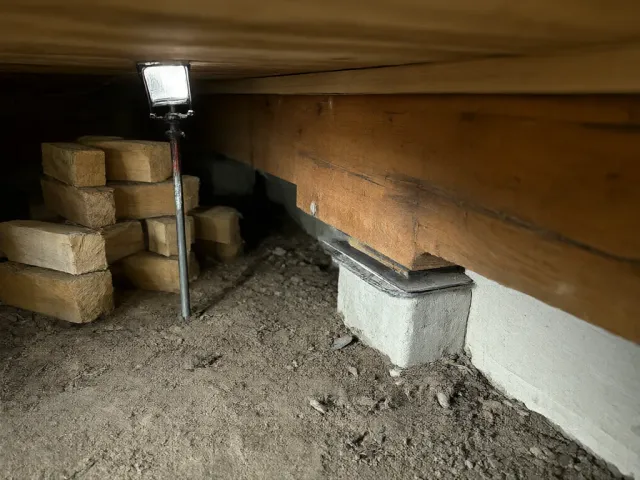
Crawl Space Drainage
Pier and beam houses with water standing under them need the water stopped at the source and an exit for whatever gets in. We regrade the perimeter, add a French drain where the soil carries water toward the house, and lay a vapor barrier once the dirt dries.
Before and After
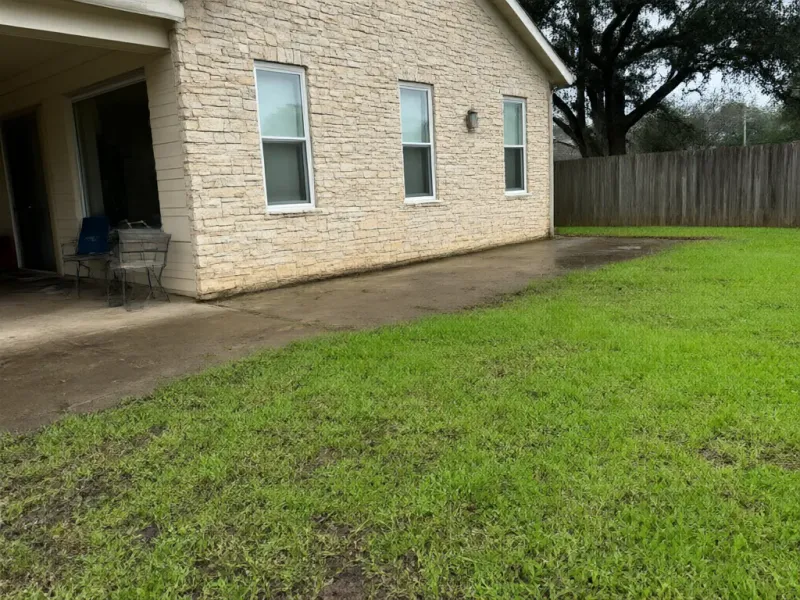
How Water Moves a Foundation on Clay
Expansive clay changes volume with its moisture. When one side of a house stays soaked from a bad downspout and the other side bakes in the afternoon sun, the slab ends up sitting on two different soils.
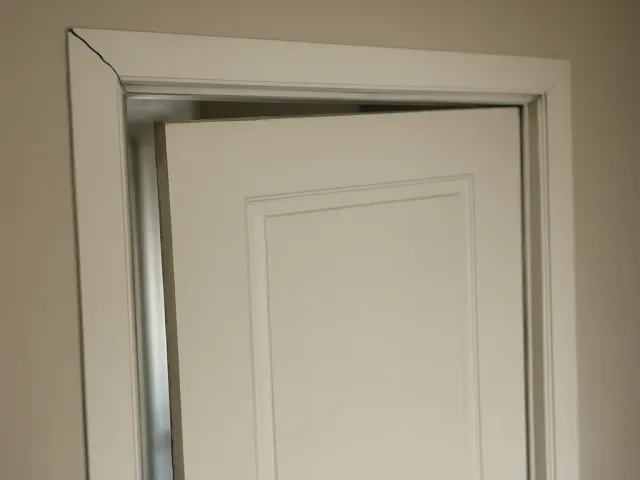
That's why a drainage problem can look exactly like a settlement problem: a dropped corner, a cracked beam, doors that stick. Sometimes it runs the other way, with the wet side heaving up. Either way, piers alone won't stop it if the water keeps doing the same thing.
Drought does the same damage from the other direction. In the 2011 drought, clay pulled far enough away from some slabs to leave open gaps along the beam. The homes that came through best were the ones where someone kept the soil around the slab evenly damp.
Signs You Have a Foundation Drainage Problem
Watch the house during a hard rain. Water sheeting off the roof where a gutter is missing, puddles sitting against the beam for hours, and mulch beds holding water like a bathtub are the easy ones to spot.
After the rain, look for soil washing out at the corners, stains on the brick near the ground, and a crawl space that stays muddy for days. Inside a pier and beam house, a musty smell usually means water is getting underneath.
What You Can Fix Yourself
Clean the gutters, put the downspout extensions back on and point them away from the house. Pull mulch and soil down so a few inches of beam show above grade. Those three things fix more drainage problems than any contractor does.
Drainage First, Piers Second
We look at drainage on every foundation inspection, even when you called about something else. If water is feeding the problem, we tell you before we talk about piers.
On some houses drainage is the whole fix. On others, piers come first and drainage keeps the lift from drifting back. Our pier warranty doesn't cover damage from water problems we flagged in writing, so we'd rather fix the water with you now than argue about it later.
Our Foundation Drainage Process
Watch where the water goes
We walk the lot, check roof runoff, grades and low spots, and measure the fall away from the foundation with a level.
Design the fix
You get a drawing showing pipe runs, outlets and grade changes, priced per foot or per item and good for 30 days.
Mark utilities and sprinklers
Before we trench, utilities get located. We flag sprinkler lines too, so we can work around them or fix what we cut.
Trench, lay and regrade
Crews trench, set fabric, gravel and pipe at the right fall, tie in the downspouts and regrade the soil away from the beam. Most jobs take 1 to 2 days.
Water test
We run a hose into every inlet and downspout to prove the water comes out where it should, then put the sod and beds back.
Foundation Drainage FAQs
Will a French drain fix my foundation?
It fixes the water problem. If the foundation has already dropped, it still needs piers to lift it. On many homes we do both: piers to correct the movement, drainage to keep it from coming back.
How much does foundation drainage cost?
French drains run $32 to $55 a linear foot, downspout lines $18 to $30 a foot, and regrading $1,200 to $3,800. Most homes need one or two of those, not all three.
Do I really need gutters?
On clay, gutters with downspouts carried at least 5 feet out are one of the cheapest ways to protect a foundation. A roof dumping straight onto the soil keeps one strip of clay soaked and leaves the rest dry.
How far should the ground slope away from my foundation?
The residential code calls for at least 6 inches of fall in the first 10 feet. We measure it on every inspection, and most problem lots we see are flat or sloped back toward the house.
Should I still water my foundation if I have a French drain?
Yes, in a dry summer. The drain handles storm water, and the watering line keeps the clay from shrinking during long dry spells. They do opposite jobs and work fine together.
Get Your Drainage Checked
Call (830) 221-9409 or send the form. We'll walk the lot, measure the grades and tell you whether water is part of your foundation problem.